

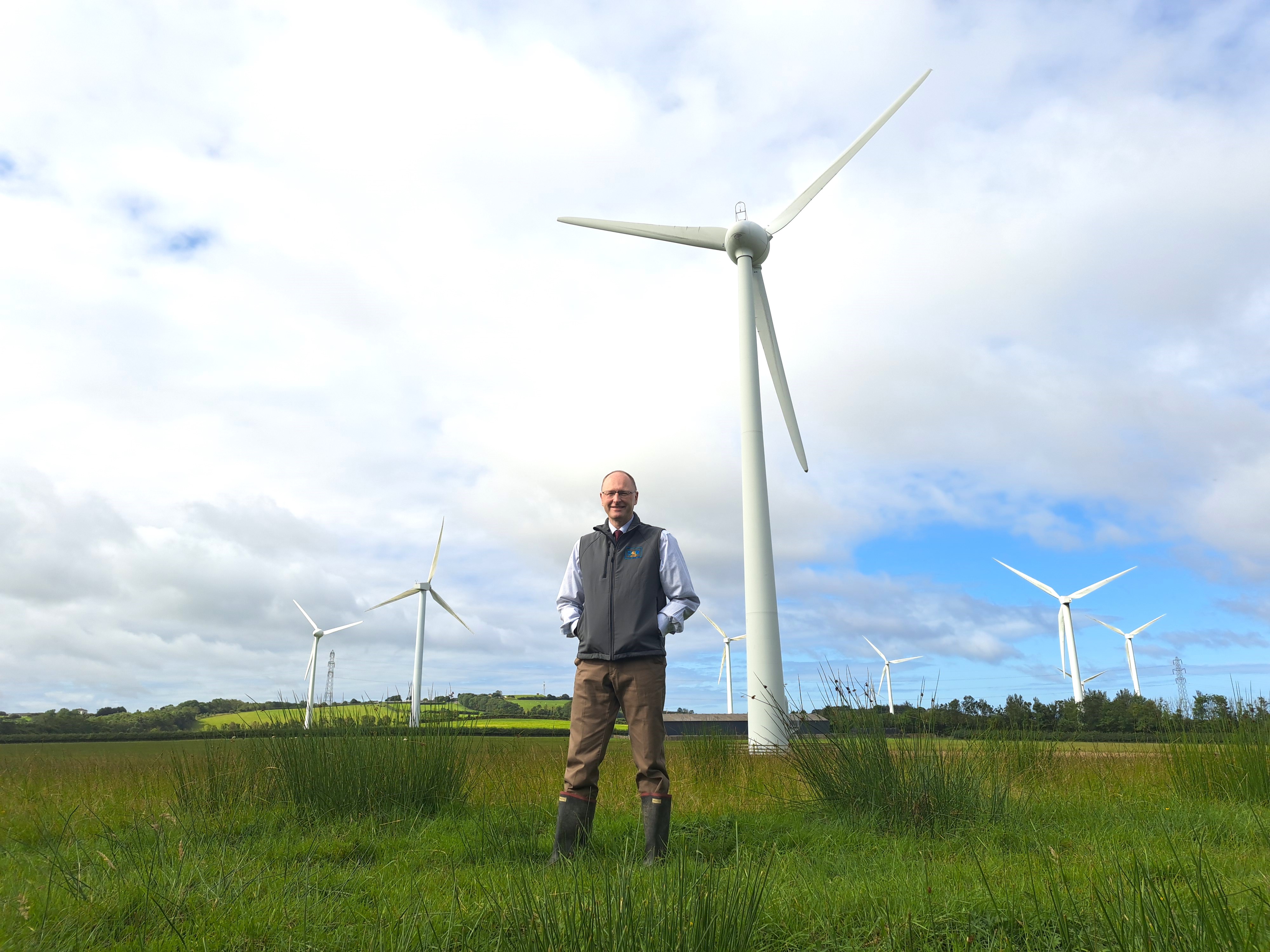
Looking at existing renewable contracts now can protect new contract income in the future
Farmers and landowners with existing wind turbine and renewable energy contracts are being urged to start planning for the future, with a warning that leaving decisions until the final years of their contracts could mean missing significant financial opportunities or being cut out entirely.
Ian Austin, Director and Head of Utilities, Energy and Infrastructure at Davidson & Robertson (D&R) is advising clients to act now; considering objectives and available options before developers approach with potentially restrictive, standard roll-over terms.
Ian said “Many of Scotland’s first generation wind turbine contracts are creeping toward expiry dates in the next ten to fifteen years. While that timeline seems distant, farmers and landowners delaying renewal decisions until the latter years, could severely damage their negotiating leverage and may be cut out of future repowering proposals. Advanced renewable technologies provide major opportunities for financial returns if strategically planned, however, just because you currently have turbines on your land, this does not guarantee you will in the future.
“Not all landowners are aware of what ‘repowering’ actually means. Ultimately, it is a completely new development replacing older turbines with fewer but larger and vastly more efficient models. This can trigger potentially different land and access requirements and contractual obligations and is very different from a “lease extension” which is simply seeking to extend the life of the existing turbines.”
It is clear that planning for the end of a renewables contract isn’t something to leave until the final few years. Repowering is akin to the initial development where 10 year option agreements to obtain the necessary rights were largely standard. Landowners should act now to get the best chance of securing future development, the best financial outcomes and the most favourable terms. By acting early, farmers and landowners can keep themselves in the driving seat rather than letting developers dictate the future of their land.
There could be opportunities to extend the existing contract, agree a contract with a new or existing developer, and potentially consider options for rent continuity payments to cover the changeover period. Again, the complexity of negotiating these new terms, means landowners should start taking action now.
Commenting on the process, Ian Austin said “We are already looking at clients’ existing contracts with a view to helping them achieve the best outcome for their business.
“By engaging with us at this stage, our team can accurately assess the farmer/landowner’s land and ambitions, guiding them in forming a beneficial partnership with a developer. That could either be by negotiating a new contract with the existing developer, or by matching the farmer/landowner with one of our developer contacts that we believe is best aligned to what our clients want to achieve.
“We urge anyone with ten to fifteen years remaining on their contract, to start reviewing their options as soon as possible.”
While it seems like a long way off, if a farmer or landowner is in the 10-15 year timeframe, they should contact their agent now and most certainly before signing any paperwork or preliminary agreements, including exclusivity agreements, presented by the existing developer.”
Those looking to review their renewable contract and explore future opportunities can contact the D&R Utilities, Energy, and Infrastructure team on 0131 449 6212 or email utilities@drrural.co.uk