

Exploring the changes to rural industry and professional advice
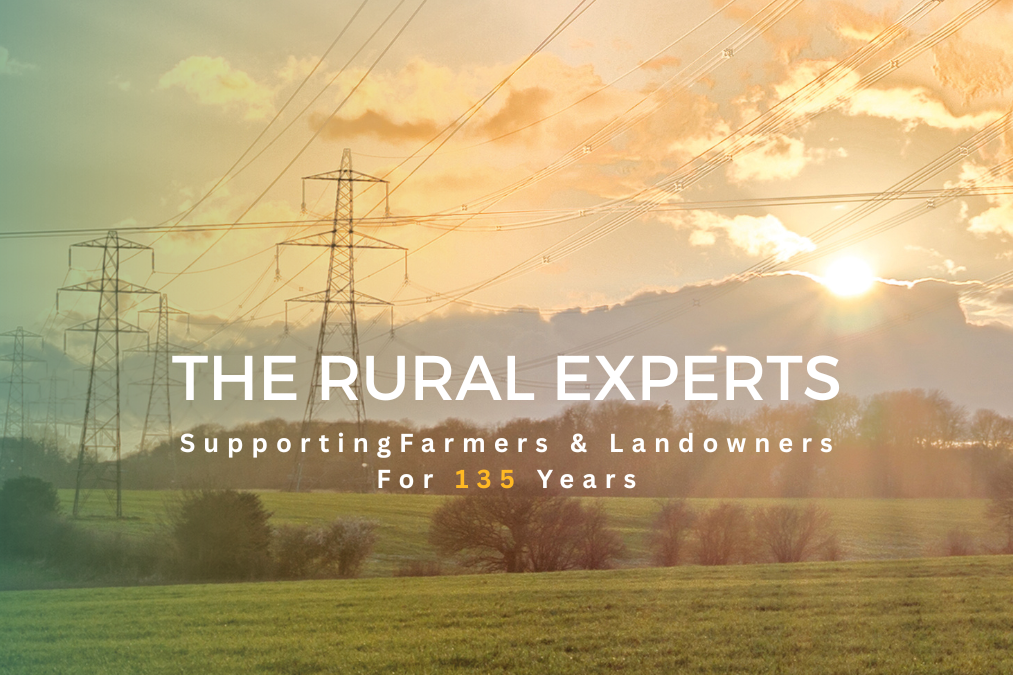
For 135 years, D&R has supported clients through major infrastructure developments, from the arrival of power in the Highlands and the creation of the National Grid to building the M8 and upgrades to the A9. Today, we continue this legacy, helping landowners navigate the transition to clean energy.
To mark our anniversary, we asked three team members, from different generations, career stages, and locations, to reflect on how the sector has evolved, today’s challenges and the future of rural business.
Their perspectives highlight a balance of continuity and change: trusted, practical advice and local knowledge remain vital, while rising costs, tighter margins, regulation, and succession planning are driving businesses to adapt and diversify.
Niall Milner, Director and Head of Property & Forestry, has spent 25 years with D&R, and his thoughts unfold a strong link to D&R’s past, its continuity, and the changes he has witnessed.
Kerry Clark, an Associate in the Utilities team and a beef and sheep farmer, combines professional expertise with strong links as a previous NFUS Regional Secretary and is well known in Scotland’s farming community.
Andrew Frank joined D&R as a Graduate Surveyor and is now a Land Agent based in Aberdeenshire. He is also developing his own farming enterprise and considers what the future of farming may look like.
Niall Milner: “Farming has become more financially and operationally challenging, and D&R has evolved from supporting traditional farming enterprises to helping clients identify and deliver a much wider range of opportunities.”
Founded 135 years ago as Scotland’s oldest Land Agents, we began by valuing land, farms, and estates. This expertise led to a leading role in third-party rights and land acquisition, from WW1 land requisitions, the development of national gas and oil networks, to today’s renewable energy projects. As agriculture and infrastructure modernised, we have evolved and broadened our services too.
In the past 25 years, farming has grown more demanding. Margins have tightened, and costs have outpaced returns, requiring greater capital to achieve the same results.
While challenges change, the fundamentals remain: practical advice, problem-solving, and trusted relationships.
Today’s focus is on driving efficiency and exploring new diversification income streams like renewables, storage, and commercial ventures, beyond traditional agriculture, stewardship, and tourism.
Technology is transformational, moving from digital cameras in my graduate year to drones and instant communication. Clients are also embracing technology such as on-farm vending, which can connect producers directly with customers.
Clients increasingly need advisers who understand complex income streams, evolving land rights, and stakeholder management. The need for clear advice and decisive decision-making remains, as we help clients navigate broader opportunities and challenges.”
——————————————————-
Kerry Clark: Farming is becoming more complex, and advisers who genuinely understand farming are more valuable than ever
As a farmer, it means a great deal to be embedded in the local farming community. Understanding the industry helps me relate to clients who appreciate a grounded approach and our experience. My role as an NFUS Scotland Regional Secretary and membership of the SAYFC are important to me and remain valuable farming networks. Much of our work comes from recommendations, so trust and understanding are hugely important.
The biggest challenges we face in farming are policy changes, rising costs, falling product values, and some negative perceptions of the industry. There is often a disconnect between food security and the respect afforded to farmers and landowners.
Infrastructure projects also present growing concerns. While much current work involves refurbishment, new projects can carry statutory powers, raising fears that negotiations may become less collaborative.
I am fortunate to be in the right position to support clients affected by infrastructure work. Outside work, I am a farmer – that foothold in the industry helps massively.
————————–
Andrew Frank: The future of farming will demand larger-scale thinking, earlier planning and greater business resilience, and farmers will increasingly need long-term professional support to navigate those changes.
“A degree in Rural Business Management from SRUC Aberdeen was a natural progression to becoming a Land Agent, and a practical understanding of farming makes it easier to relate to his Aberdeenshire clients, many of whom are faced with infrastructure work on their land.
Looking forward, labour costs and the crippling price of fertiliser and fuel mean larger farms have more buying power, putting them in better stead to maintain margins. Smaller farms will struggle to remain viable without additional income, but on a positive note, several forward-thinking, smaller-model farms focus on agroecology and shorter supply chains.
Futureproofing for climate change is the biggest challenge for the next generation, so adapting food production choices now will put farms in a better position.
We will see compliance and regulation continuing to increase, so the role of rural professionals is changing to support this. There is a greater focus on valuations, with restructuring and business planning enabling discussions and preparations around succession planning to be made sooner rather than later. “
